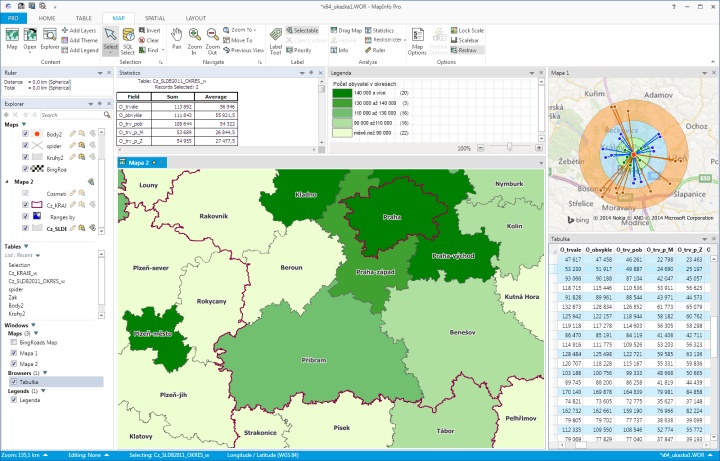
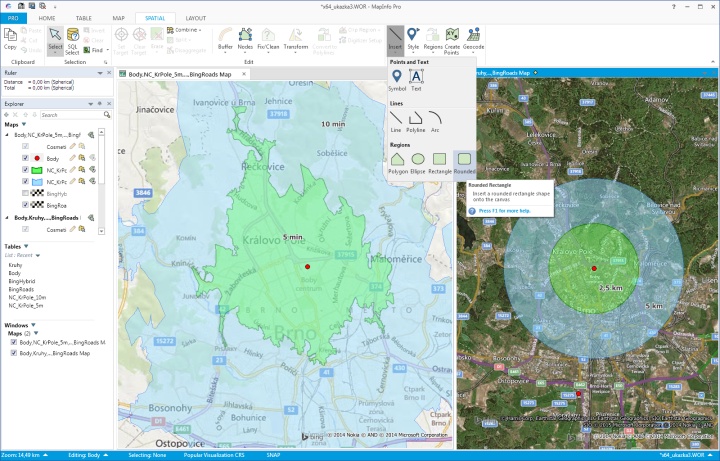
MapInfo Pro is extremely flexible and can be easily integrated with your current IT systems. It is also extremely user-friendly so you don’t need to be an IT expert to use it.
The standard version of MapInfo Pro uses a 64-bit architecture, the user interface is modern and easy to learn. This version contains most commonly used functionality, such as access to a variety of data and map formats, creating thematic maps, SQL queries, editing functions, regions redistricting, exporting maps and data, table structure management etc. This version contains also a number pre-installed add-on tools such as MapCAD, Distance Calculator, Spider Graph and many more. This is the most commonly used version of the application.
MapInfo Pro™ Advanced builds on MapInfo Pro™ introducing a highly performant raster grid analysis solution, featuring an innovative grid data format called Multi-Resolution Raster (MRR). It enables the super-fast processing, visualization and analysis of high resolution grid and image data; providing a step change in performance and usability even when working at a continental or global scale.
More information
MapInfo Viewer is a free application that allows users to work with workspaces that have been created in the full version of MapInfo Pro. Free registration of the user account is required to use the application. MapInfo Viewer (since version 17.0.2) is based on the same code as the full version of MapInfo Pro, so the user interface is the same. Map compositions can be viewed, users can save maps to PDF/images, Layer Control allows to switch on/off the layers etc.
More information
The rise of adult content in Indonesia has been a topic of discussion in recent years. With the increasing accessibility of the internet and social media, adult content has become more widely available and accessible to a broader audience. One genre of adult content that has gained popularity in Indonesia is the type of content that features women wearing hijabs and traditional clothing, such as dasteran. This type of content often features women who are depicted as being overweight or chubby, and the videos or images may include explicit or suggestive content. The popularity of this type of content has raised concerns about the objectification of women and the potential impact on Indonesian culture and society. Some argue that the production and consumption of this type of content can perpetuate negative stereotypes and objectify women, particularly those who wear hijabs and traditional clothing. Others argue that the content is a form of self-expression and a way for women to assert their autonomy and agency. It's essential to note that the production, distribution, and consumption of adult content are complex issues that involve various stakeholders, including governments, content creators, and consumers. In Indonesia, there are laws and regulations that govern the production and distribution of adult content, and it's essential to ensure that these laws are enforced to protect the rights and dignity of all individuals involved. In conclusion, the topic of pap dari binor chubby hijab dasteran sange omek ngangkang indo18 top is a complex issue that requires careful consideration and nuanced discussion. While the content may be popular among some segments of the population, it's essential to consider the potential impact on Indonesian culture and society and to ensure that the rights and dignity of all individuals involved are protected.
Exploring the Beauty of Indonesian Culture: A Deep Dive into Traditional Attire Indonesia, a country with a rich cultural heritage, is home to diverse traditional clothing that reflects its history, values, and social norms. In this article, we'll focus on several aspects of Indonesian culture, including the "pap dari binor," "chubby hijab," "dasteran," and the significance of modesty in Indonesian society. Understanding the "Pap dari Binor" The term "pap dari binor" seems to be related to a type of traditional Indonesian setting or context, but I couldn't find a direct translation. However, I can infer that it might be connected to a rural or countryside setting, given the word "binor" which could be related to "binur" or " village." In rural Indonesian settings, traditional clothing and textiles play a significant role in daily life and cultural celebrations. These areas are often characterized by close-knit communities where traditional practices and customs are still deeply ingrained. The Beauty of "Chubby Hijab" and Modesty in Indonesian Culture In Indonesia, the hijab is an integral part of many women's attire, symbolizing modesty and respect for cultural and religious norms. The term "chubby hijab" seems to refer to a style of hijab that is comfortable and suitable for women with a curvier figure. The hijab has become an essential aspect of Indonesian fashion, with many designers incorporating modern and stylish elements into their designs while maintaining the principles of modesty. Indonesian women, including those who wear the hijab, are celebrated for their fashion sense, which often blends traditional and contemporary styles. The Significance of "Dasteran" in Indonesian Traditional Attire "Dasteran" refers to a type of traditional Indonesian garment, often worn as a loose-fitting dress or tunic. This attire is commonly seen in rural areas and is prized for its comfort and practicality. In Indonesian culture, the dasteran is often associated with domesticity and is considered a suitable garment for daily activities, such as cooking, gardening, or taking care of children. However, modern Indonesian women have also adopted the dasteran as a fashion statement, incorporating vibrant colors and patterns into their outfits. The Importance of Cultural Sensitivity and Respect When discussing cultural practices and traditional attire, it's essential to approach the topic with sensitivity and respect. Indonesian culture, like many others, is complex and multifaceted, and it's crucial to avoid stereotypes or misrepresentations. In recent years, Indonesia has experienced a growing trend of cultural and artistic expression, with many young Indonesians proudly showcasing their heritage through fashion, music, and art. Conclusion Indonesian culture is a treasure trove of rich traditions, customs, and practices, which are beautifully reflected in its traditional attire. The "pap dari binor," "chubby hijab," "dasteran," and other aspects of Indonesian fashion are testaments to the country's diversity and creativity. By embracing and respecting cultural differences, we can foster greater understanding and appreciation for the complexities of human experience. As we explore and learn about Indonesian culture, let's do so with empathy, curiosity, and an open mind. Additional Information For those interested in learning more about Indonesian culture and traditional attire, I recommend exploring reputable sources, such as cultural institutions, museums, or academic journals. These resources can provide a wealth of information on the history, significance, and evolution of Indonesian fashion and customs. By engaging with these resources, we can gain a deeper understanding of the complexities and nuances of Indonesian culture, ultimately promoting greater cultural awareness and appreciation.
The Beauty of Diversity: Understanding Fashion Choices in Indonesia Indonesia, being a diverse and vibrant country, is home to a myriad of cultures, traditions, and expressions. Among these expressions, fashion plays a significant role in showcasing the identity and values of its people. This article aims to explore two interesting aspects of Indonesian fashion: the hijab and dasteran, and the importance of respecting individual choices. The Hijab: A Symbol of Faith and Identity The hijab, a headscarf worn by many Muslim women, is not just a piece of cloth; it's a symbol of faith, modesty, and identity. For those who choose to wear it, the hijab represents their commitment to their religious beliefs and serves as a form of self-expression. In Indonesia, a country with the world's largest Muslim population, the hijab has become an integral part of many women's daily attire, reflecting their spiritual values and personal style. Dasteran: A Traditional Attire for Comfort and Elegance On the other hand, dasteran refers to a type of traditional Indonesian attire, often worn for its comfort and elegance. Dasteran is usually made from lightweight fabrics such as cotton or silk, making it a popular choice for daily wear or special occasions. This traditional garment embodies the Indonesian values of simplicity, modesty, and beauty, showcasing the wearer's cultural heritage. The Significance of Respect and Understanding In a diverse society, it's essential to foster an environment of respect and understanding towards individual choices, including fashion preferences. Clothing is a form of self-expression and can reflect one's cultural background, personal style, or religious beliefs. The keyword provided seems to hint at a much more specific and potentially sensitive topic. However, the focus here is on promoting a positive and respectful dialogue about fashion as a form of personal and cultural expression. The Beauty of Indonesian Fashion Indonesian fashion, with its rich cultural heritage, offers a vast array of styles and choices. From the traditional to modern interpretations, fashion in Indonesia is a vibrant reflection of its people's diversity. The hijab and dasteran are just a few examples of the many beautiful expressions of Indonesian fashion. In conclusion, fashion is a powerful form of self-expression and cultural identity. By appreciating and respecting the choices of others, we can foster a more inclusive and understanding society. Indonesian fashion, with its diverse expressions, offers valuable insights into the country's rich cultural tapestry.
If you're looking to discuss or understand the context of these keywords, let's break them down:
Pap : Often used as a short form for "Photo" or could be related to "Papua" in a geographical context, but it might also be used in another context entirely.
Binor : Could stand for "Binary Orbital," but in a different context, it could relate to a community or group.
Chubby : Refers to someone with a fuller or rounder body type.
Hijab : A form of headwear commonly worn by many Muslim women.
Dasteran : This term seems to relate to a type of garment.
Sange : Translates to "Desire" or "Want" in English.
Omek : Could imply a kind of action or behavior.
Nangkang : Translates to " Legs wide apart" in English.
Knowledge Community connects everyone with specialists across Pitney Bowes organization to encourage the exchange of ideas, information and to ask product-related questions.
Knowledge CommunityUseful add-on applications for MapInfo Pro that you can download and install for your license.
ToolsThe rise of adult content in Indonesia has been a topic of discussion in recent years. With the increasing accessibility of the internet and social media, adult content has become more widely available and accessible to a broader audience. One genre of adult content that has gained popularity in Indonesia is the type of content that features women wearing hijabs and traditional clothing, such as dasteran. This type of content often features women who are depicted as being overweight or chubby, and the videos or images may include explicit or suggestive content. The popularity of this type of content has raised concerns about the objectification of women and the potential impact on Indonesian culture and society. Some argue that the production and consumption of this type of content can perpetuate negative stereotypes and objectify women, particularly those who wear hijabs and traditional clothing. Others argue that the content is a form of self-expression and a way for women to assert their autonomy and agency. It's essential to note that the production, distribution, and consumption of adult content are complex issues that involve various stakeholders, including governments, content creators, and consumers. In Indonesia, there are laws and regulations that govern the production and distribution of adult content, and it's essential to ensure that these laws are enforced to protect the rights and dignity of all individuals involved. In conclusion, the topic of pap dari binor chubby hijab dasteran sange omek ngangkang indo18 top is a complex issue that requires careful consideration and nuanced discussion. While the content may be popular among some segments of the population, it's essential to consider the potential impact on Indonesian culture and society and to ensure that the rights and dignity of all individuals involved are protected.
Exploring the Beauty of Indonesian Culture: A Deep Dive into Traditional Attire Indonesia, a country with a rich cultural heritage, is home to diverse traditional clothing that reflects its history, values, and social norms. In this article, we'll focus on several aspects of Indonesian culture, including the "pap dari binor," "chubby hijab," "dasteran," and the significance of modesty in Indonesian society. Understanding the "Pap dari Binor" The term "pap dari binor" seems to be related to a type of traditional Indonesian setting or context, but I couldn't find a direct translation. However, I can infer that it might be connected to a rural or countryside setting, given the word "binor" which could be related to "binur" or " village." In rural Indonesian settings, traditional clothing and textiles play a significant role in daily life and cultural celebrations. These areas are often characterized by close-knit communities where traditional practices and customs are still deeply ingrained. The Beauty of "Chubby Hijab" and Modesty in Indonesian Culture In Indonesia, the hijab is an integral part of many women's attire, symbolizing modesty and respect for cultural and religious norms. The term "chubby hijab" seems to refer to a style of hijab that is comfortable and suitable for women with a curvier figure. The hijab has become an essential aspect of Indonesian fashion, with many designers incorporating modern and stylish elements into their designs while maintaining the principles of modesty. Indonesian women, including those who wear the hijab, are celebrated for their fashion sense, which often blends traditional and contemporary styles. The Significance of "Dasteran" in Indonesian Traditional Attire "Dasteran" refers to a type of traditional Indonesian garment, often worn as a loose-fitting dress or tunic. This attire is commonly seen in rural areas and is prized for its comfort and practicality. In Indonesian culture, the dasteran is often associated with domesticity and is considered a suitable garment for daily activities, such as cooking, gardening, or taking care of children. However, modern Indonesian women have also adopted the dasteran as a fashion statement, incorporating vibrant colors and patterns into their outfits. The Importance of Cultural Sensitivity and Respect When discussing cultural practices and traditional attire, it's essential to approach the topic with sensitivity and respect. Indonesian culture, like many others, is complex and multifaceted, and it's crucial to avoid stereotypes or misrepresentations. In recent years, Indonesia has experienced a growing trend of cultural and artistic expression, with many young Indonesians proudly showcasing their heritage through fashion, music, and art. Conclusion Indonesian culture is a treasure trove of rich traditions, customs, and practices, which are beautifully reflected in its traditional attire. The "pap dari binor," "chubby hijab," "dasteran," and other aspects of Indonesian fashion are testaments to the country's diversity and creativity. By embracing and respecting cultural differences, we can foster greater understanding and appreciation for the complexities of human experience. As we explore and learn about Indonesian culture, let's do so with empathy, curiosity, and an open mind. Additional Information For those interested in learning more about Indonesian culture and traditional attire, I recommend exploring reputable sources, such as cultural institutions, museums, or academic journals. These resources can provide a wealth of information on the history, significance, and evolution of Indonesian fashion and customs. By engaging with these resources, we can gain a deeper understanding of the complexities and nuances of Indonesian culture, ultimately promoting greater cultural awareness and appreciation.
The Beauty of Diversity: Understanding Fashion Choices in Indonesia Indonesia, being a diverse and vibrant country, is home to a myriad of cultures, traditions, and expressions. Among these expressions, fashion plays a significant role in showcasing the identity and values of its people. This article aims to explore two interesting aspects of Indonesian fashion: the hijab and dasteran, and the importance of respecting individual choices. The Hijab: A Symbol of Faith and Identity The hijab, a headscarf worn by many Muslim women, is not just a piece of cloth; it's a symbol of faith, modesty, and identity. For those who choose to wear it, the hijab represents their commitment to their religious beliefs and serves as a form of self-expression. In Indonesia, a country with the world's largest Muslim population, the hijab has become an integral part of many women's daily attire, reflecting their spiritual values and personal style. Dasteran: A Traditional Attire for Comfort and Elegance On the other hand, dasteran refers to a type of traditional Indonesian attire, often worn for its comfort and elegance. Dasteran is usually made from lightweight fabrics such as cotton or silk, making it a popular choice for daily wear or special occasions. This traditional garment embodies the Indonesian values of simplicity, modesty, and beauty, showcasing the wearer's cultural heritage. The Significance of Respect and Understanding In a diverse society, it's essential to foster an environment of respect and understanding towards individual choices, including fashion preferences. Clothing is a form of self-expression and can reflect one's cultural background, personal style, or religious beliefs. The keyword provided seems to hint at a much more specific and potentially sensitive topic. However, the focus here is on promoting a positive and respectful dialogue about fashion as a form of personal and cultural expression. The Beauty of Indonesian Fashion Indonesian fashion, with its rich cultural heritage, offers a vast array of styles and choices. From the traditional to modern interpretations, fashion in Indonesia is a vibrant reflection of its people's diversity. The hijab and dasteran are just a few examples of the many beautiful expressions of Indonesian fashion. In conclusion, fashion is a powerful form of self-expression and cultural identity. By appreciating and respecting the choices of others, we can foster a more inclusive and understanding society. Indonesian fashion, with its diverse expressions, offers valuable insights into the country's rich cultural tapestry.
If you're looking to discuss or understand the context of these keywords, let's break them down: The rise of adult content in Indonesia has
Pap : Often used as a short form for "Photo" or could be related to "Papua" in a geographical context, but it might also be used in another context entirely.
Binor : Could stand for "Binary Orbital," but in a different context, it could relate to a community or group.
Chubby : Refers to someone with a fuller or rounder body type. This type of content often features women who
Hijab : A form of headwear commonly worn by many Muslim women.
Dasteran : This term seems to relate to a type of garment.
Sange : Translates to "Desire" or "Want" in English. Others argue that the content is a form
Omek : Could imply a kind of action or behavior.
Nangkang : Translates to " Legs wide apart" in English.