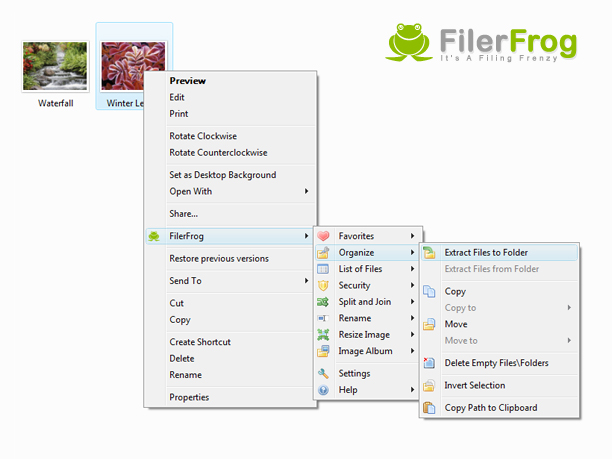
FilerFrog adds powerful file management tools right to your right-click menu. Rename files in bulk, encrypt, resize images, split & join, and much more — all without leaving Explorer.
A signature element of Meadows’ training is the formalization of "tolerance loops." Engineers learn to draw a continuous path through an assembly, starting from a baseline feature, moving through each contributing dimension, and ending at the critical clearance or interference gap being analyzed. This visual and logical loop ensures no dimensions are missed and none are counted twice. Step-by-Step Methodology for a Stack-Up Analysis
"Tolerance Stack-Up Analysis" by James D. Meadows is a widely recognized text-workbook designed to teach engineers a structured approach to calculating tolerance accumulation in mechanical assemblies. It bridges the gap between theory and application by covering worst-case scenarios, root sum square (RSS) statistics, and GD&T integration to ensure practical fit and function. For further information, visit Amazon.com Amazon.com Tolerance Stack-Up Analysis by James D. Meadows tolerance stack-up analysis by james d. meadows
There are two types of tolerance stack-up analysis: A signature element of Meadows’ training is the
James D. Meadows' methodology for tolerance stack-up analysis provides a structured framework for calculating assembly variations by integrating coordinate dimensioning with ASME Y14.5 GD&T standards. The approach focuses on loop analysis, boundary calculations (virtual and resultant conditions), and both worst-case and statistical (RSS) analysis to ensure proper fit, function, and cost optimization. Detailed resources and training are available through GeoTol Meadows Meadows is a widely recognized text-workbook designed to
If you are looking for a deep dive into the subject, studying the literature and GD&T techniques promoted by James D. Meadows is the definitive starting point.
Requires Windows 10 or later — 64-bit